Community Health
We build partnerships with local organizations to advance health equity in New York City

Surviving Stage IV Cancer: The Power of Patient Peer Navigators
RTW Foundation is proud to support Karen’s Club, a Community Health Grant partner helping patients of color navigate cancer care. After being diagnosed with triple-negative breast cancer that progressed to stage IV, founder Karen Peterson pursued a clinical trial that changed the course of her treatment. Her experience inspired her to help others understand their treatment options and access clinical research. Watch RTW Foundation President Stephanie Sirota’s conversation with Karen about her journey, clinical trial representation, and how Karen’s Club empowers patients to make informed decisions about their care.

2026 Community Health Grant Cycle
RTW Foundation has launched its 2026 Community Health Grant Cycle, that provides funding to organizations working to address barriers to safe, affordable access to care and advance health equity across New York City. We believe our communities are strongest when we work together, and through grant funding, collaboration, and collective action, we support local organizations driving meaningful change.
Roderick Wong, MD
One of the hallmarks of our community partnerships is that we go beyond just financial support. Our team truly engages with communities and serves alongside our partners.
Sarah Garwood
Locally-led development is critical for lasting impact in the community. One thing I love about our work at RTW Foundation is that we really focus our projects on community-led initiatives and shift the power to local leaders. Our partners know the challenges their communities are facing the best, making them best positioned to respond well.

Terrie Paladino
Working with the RTW team has been a profoundly positive and rewarding experience. RTW has been a true partner, consistently demonstrating ongoing support of our work through open communications, program assessments, collaborations with other RTW partners, and accessibility which helps elevate our programming and strengthen the impact we have on the women we serve.

Vianey Romero-Mendez
Throughout our engagement with RTW Foundation, one of the most valuable aspects has been the Foundation’s trust in community-based organizations like Mixteca and its understanding of the realities faced by immigrant communities. RTW’s flexible and responsive approach has allowed us to adapt programming to the evolving needs of our community while continuing to center culturally responsive health education.

Hewett Chiu
RaisingHealth is thrilled to receive RTW Foundation’s support sustaining our free, culturally tailored mental health services for uninsured immigrants. This support comes at a crucial moment, when our immigrant communities are facing immense harms, stressors, and barriers to care.

Community Health Impact to Date
Supporting our community

Health Equity Grants
At RTW Foundation, we believe that building strong, lasting relationships with our Grant Partners is the cornerstone of meaningful change.
Learn more
Value Beyond Funding
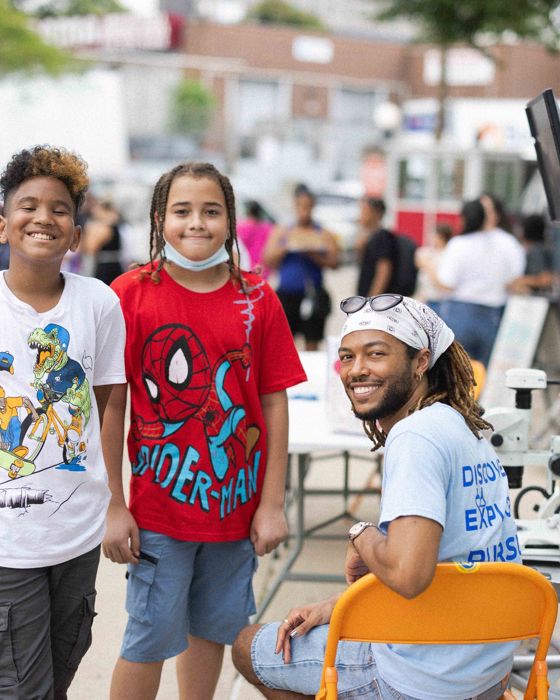
We partner with grantees to co-create programs and community events, including community health fairs, that bring communities together, expand access to support, and amplify our collective impact.

Days of Action
RTW Foundation and our community health partners are committed to advancing health equity by addressing key social determinants of health in NYC and beyond. One key way we achieve this is through our Days of Action.
Learn MoreFree Health Services in NYC Through Our Partners
Montefiore's CICERO program provides confidential HIV/AIDS testing, treatment, and counseling in addition to primary care services. The African International Collaborative Center provides health resources to strengthen African immigrant communities.
AIRnyc works to improve health access, referral support, and care navigation.
RaisingHealth Partners, Mexican Coalition, and Mixteca provide community-based health services including screenings, care navigation, preventive care, and social services for immigrant communities in Brooklyn.
ACT Care Foundation delivers specialized health, nutritional, and community support services to underinsured New Yorkers.
Harlem United and New York Cares expand access to healthcare, mental health, and housing services, with Harlem United assisting people with harm reduction. Saving Mothers empowers mothers with self-advocacy resources, health equipment and health education to their providers. Karen's Club provides personalized and culturally responsive consulting to cancer patients of color.
Exodus Transitional Community and East Harlem Health Outreach Partnership (EHHOP) reduce barriers to free care by providing transportation to appointments, mental health services, and addressing social needs. Mount Sinai supports research for the care of patients with PACS. Violence Intervention Program helps Latinx survivors of domestic violence, and trains counselor advocates.
Send Chinatown Love, Think!Chinatown, and Welcome to Chinatown, support small businesses, food security, and social services for families in Chinatown. Hamilton-Madison House provides behavioral health services, youth education, and family support.
Karen's Club provides personalized and culturally responsive consulting to cancer patients of color.
The NYU Langone Health Undiagnosed Diseases Program, provides long-awaited diagnoses for medically complex patients who have gone years without answers after standard clinical evaluations.
Razom provides a wide range of medical supplies to first responders and hospitals in Ukraine.
Grameen Promotoras, a Grameen America community health program, supports underserved entrepreneurs across New York City with health education, screenings, and personalized referrals and care navigation.
The Floating Hospital provides comprehensive affordable medical care to patients, offering free transportation from shelters and safe houses across the five boroughs.
Community Health Action of Staten Island trains healthcare providers in health literacy and reduces barriers to health care.


Contact us for information on open grants and how to apply